
Start with a reusable kit
Building a zero-waste travel kit begins with the two items you will use most often: a way to drink water and a set of utensils for eating. These tools replace the single-use plastics that clutter airports, hotels, and tourist spots. By packing these basics, you remove the immediate temptation to buy disposable cups, cutlery, or bottles.
Pack a filtered water bottle
A standard reusable bottle is a start, but a filtered bottle is a necessity for international travel. Many destinations have tap water that is unsafe to drink or tastes of chlorine. A built-in filter lets you fill up from public fountains, hotel sinks, or restaurant taps without worrying about illness or bad taste. This single choice eliminates the need to buy plastic water bottles throughout your trip.
Look for a bottle with a multi-stage filter, such as a hollow fiber membrane or activated carbon, capable of removing bacteria and protozoa. Brands like Grayl or LifeStraw offer compact options that fit easily into a carry-on. Keep the bottle empty during security checks, then fill it immediately after passing through.
Carry a compact utensil set
Single-use plastic forks, spoons, and chopsticks are common with takeout food and airport snacks. A compact utensil set keeps you prepared for street food, picnic lunches, or hotel room meals. Bamboo or titanium sets are lightweight and durable. Choose a set that includes a fork, spoon, knife, and chopsticks if you plan to eat Asian cuisine.
Store your utensils in a small cotton pouch or a hard shell case to keep them clean. This habit signals to vendors that you are prepared, reducing their reliance on disposable options. It also saves you from searching for a trash can to discard plastic waste after your meal.
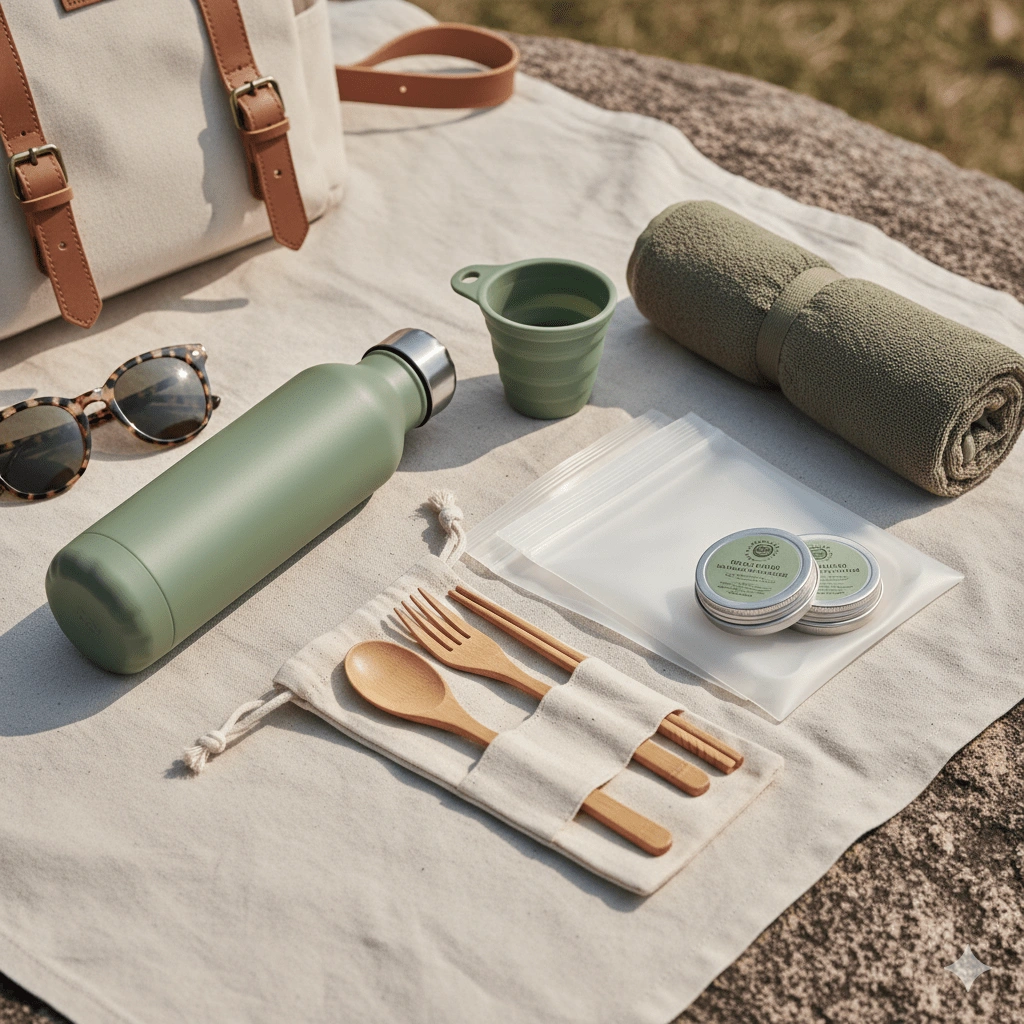
Select a bottle with a filter rated for your destination. Check the filter lifespan and replacement cost before you buy. A 100-ounce capacity is ideal for long transit days.
Opt for bamboo or titanium. Avoid plastic utensils as they break easily and still contribute to waste. Ensure the case is sealable to prevent crumbs from escaping your bag.
Place the bottle and utensils in an accessible pocket of your day bag. Test the filter mechanism and ensure the utensils fit comfortably in your hand before you leave.
Pack solid toiletries
Swap liquid bottles for solid bars and tablets to slash plastic waste and bypass TSA liquid restrictions. The average traveler generates 4 to 5 lbs of waste per trip, much of it from single-use toiletry containers. Solid shampoo bars, toothpaste tablets, and solid deodorant sticks eliminate the need for plastic packaging entirely.
This transition also simplifies packing. Without the 3-1-1 liquid rule limiting your carry-on, you can pack lighter and faster. Solid toiletries are durable, leak-proof, and last longer than their liquid counterparts when stored properly.
How to switch to solids
- Replace shampoo and conditioner. Use a single shampoo bar for both. Look for bars wrapped in paper or sold in tin containers to avoid plastic. A standard bar lasts as long as two 8-ounce plastic bottles.
- Switch to toothpaste tablets. Chew these tablets and brush with a wet toothbrush. They come in glass jars or compostable pouches, eliminating the non-recyclable plastic tube.
- Choose solid deodorant. Many brands now offer deodorant in cardboard tubes or reusable metal tins. Apply as you would a standard stick.
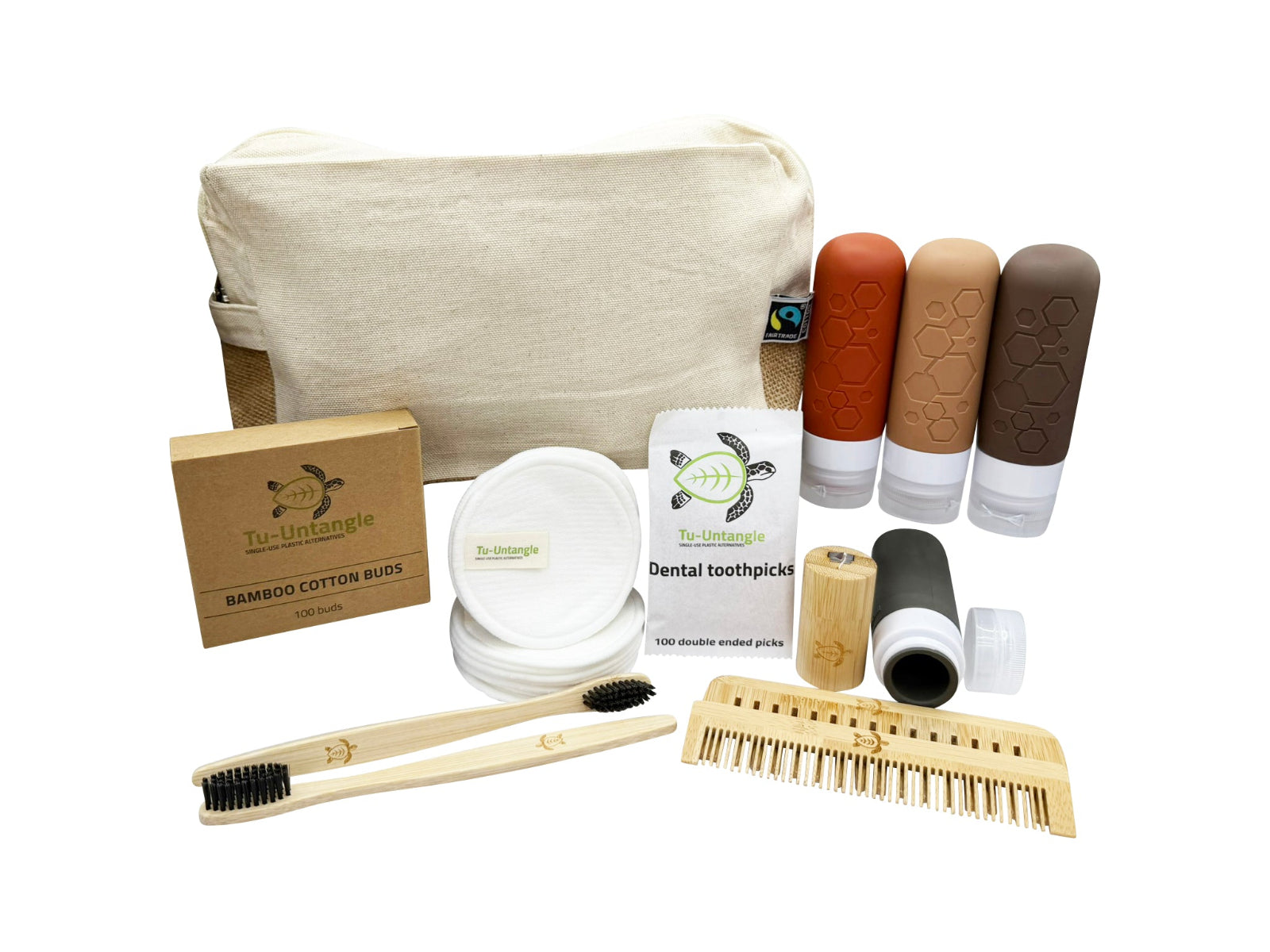
- Pack a small tin. Use a compact metal tin or reusable silicone pouch to hold your bars and tablets. This keeps them dry and organized in your toiletry bag.

Place your shampoo bar, toothpaste tablets, and solid deodorant into a small, leak-proof tin. This keeps everything organized and prevents your solid items from melting or breaking during transit.
Ensure your tin is tightly closed. Place it in the outer pocket of your toiletry bag for easy access at security checkpoints, where solid items are not subject to liquid restrictions.
By making this switch, you reduce your travel footprint significantly. You also avoid the hassle of carrying multiple plastic bottles that often leak in luggage. Solid toiletries are a simple, effective way to embrace zero-waste travel without sacrificing convenience.
Choose low-impact transport
Packing is only half the equation. How you move between destinations determines the bulk of your trip’s carbon footprint. For zero-waste travel, prioritizing trains and buses over short-haul flights is the most effective way to cut emissions. Short-haul flights generate disproportionate CO2 because a significant portion of fuel is burned during takeoff and landing, leaving little efficiency for the actual cruising phase.
Trains and buses offer a cleaner alternative for regional and intercity travel. They carry more passengers per unit of energy, spreading the environmental cost across many seats. When you book these modes, you also support infrastructure that keeps cars and planes off the road, creating a ripple effect of reduced congestion and waste.
To make an informed choice, compare the environmental impact of your options. The table below breaks down the estimated carbon emissions and waste generation for a typical 300-mile journey across three common transport modes.
| Transport Mode | CO2 (kg/passenger) | Primary Waste Sources | Energy Efficiency |
|---|---|---|---|
| Train | 14 | Minimal packaging, reusable amenities | High |
| Bus | 27 | Single-use snacks, disposable cups | Medium-High |
| Short-haul Flight | 120 | Single-use cups, foil, boarding passes | Low |
Selecting ground transport is a direct action that aligns with your zero-waste goals. It reduces the need for single-use plastics often found in airport lounges and inflight service. By choosing trains or buses, you also gain the opportunity to enjoy the landscape, turning travel time into a restorative part of your journey rather than a hurdle to clear.

Before booking flights, search for direct train or bus connections to your destination. Use aggregators that show carbon footprints alongside prices. If a ground option is within 6-8 hours, it is usually the lower-impact choice.
Look for operators that publish sustainability reports or use electric/hybrid fleets. Even if the journey is slightly longer, the reduced emissions and lack of airport security waste make it worth the trade-off for zero-waste travelers.
Ground transport often allows you to bring more substantial reusable items, like glass water bottles or ceramic mugs, which are restricted or discouraged on planes. Prepare your kit to maximize comfort without generating trash.
Book sustainable stays
Choosing where to sleep is the second biggest lever you have for reducing waste on a trip. Most hotels still rely on single-use plastics for amenities, but a growing number of properties have shifted to bulk dispensers, composting, and zero-waste housekeeping protocols.
When researching accommodations, look for specific operational details rather than generic "eco-friendly" badges. Check if the property provides refillable glass bottles for shampoo and soap instead of plastic miniatures. Verify if they have a composting program for food waste or if they source breakfast items from local farmers. These tangible practices directly reduce the volume of trash you generate while supporting the local economy.
You can also prioritize stays that operate on a low-impact model. Hostels, eco-lodges, and homestays often have smaller footprints and stricter waste segregation rules than large chain resorts. If you stay in a city apartment, look for listings that mention their waste management policy or if they encourage guests to use reusable containers for groceries.

To make your stay truly zero-waste, bring your own small kit. Pack a few reusable silicone bags for snacks, a small brush for cleaning dishes if needed, and a cloth napkin. This prevents you from relying on the accommodation's disposable options, which are often hard to recycle properly.



As an Amazon Associate, we may earn from qualifying purchases.
Avoid common packing mistakes
Zero-Waste Travel troubleshooting should start with a clear boundary: what is actually broken, and what still works normally. Check the display, network connection, paired devices, app access, and recent updates before assuming the whole system needs a reset. A small connection failure can make the main screen feel unreliable even when the core system is fine. Work from low-risk checks to deeper resets. Confirm power state, safe parking, account access, and signal first. Then restart the interface, wait for it to reload completely, and test the original symptom. Avoid changing multiple settings at once because that makes it harder to know which step actually fixed the problem. If the issue affects safety information, repeats after every restart, or appears with warning messages, treat the reset as a temporary diagnostic step rather than the final fix. Document the symptom and move to official support instead of stacking more DIY attempts.
The simplest way to use this section is to keep the setup small, verify each change, and record the stable configuration before adding optional accessories.
No comments yet. Be the first to share your thoughts!